Medical Disclaimer: The information provided in this article is for educational purposes only and is not intended as medical advice, diagnosis, or treatment. Always seek the advice of a qualified healthcare provider with any questions you may have regarding a medical condition. If you are experiencing persistent or worsening symptoms, consult a licensed professional for proper assessment. Capilano Physiotherapy North Vancouver provides professional assessment and evidence based treatment for musculoskeletal conditions, including quadratus lumborum trigger points, for individuals living on the North Shore.
Low back pain is one of the most common physical complaints in adults. In many cases, the source is not a disc problem or arthritis. Instead, it may be a small but powerful muscle deep in the lower back called the quadratus lumborum.
When trigger points develop in this muscle, they can create persistent discomfort, referred pain, and movement limitations that are often misunderstood. Many cases of trigger points in lower back pain are directly related to dysfunction in the quadratus lumborum. Understanding how this muscle works and how trigger points affect it can help you recover faster and prevent recurring pain.
What Is the Quadratus Lumborum?
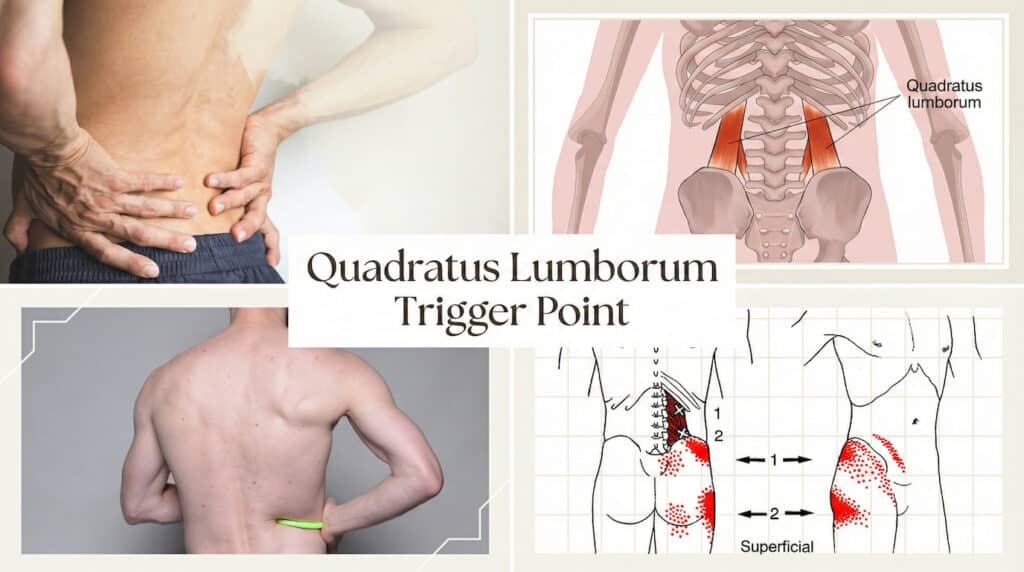
The quadratus lumborum, often shortened to QL, is a deep muscle located on both sides of the lower spine. It connects the pelvis to the lowest rib and the lumbar vertebrae.
This muscle plays an essential role in:
- Stabilizing the lower spine
- Supporting upright posture
- Assisting with side bending
- Helping control breathing by stabilizing the 12th rib
Because of its stabilizing function, the QL works constantly throughout the day, especially when sitting, standing, walking, or lifting.
What Is a Trigger Point?
A trigger point is a small, tight knot that forms within a muscle fiber. It develops when muscle tissue remains in a shortened or overloaded state for too long. These areas can become sensitive, painful, and capable of referring pain to other regions.
In the quadratus lumborum, trigger points are commonly associated with deep aching pain in the lower back, hip, or even the buttock.
Why Do Quadratus Lumborum Trigger Points Develop?
QL trigger points typically form due to repetitive stress, prolonged postures, or sudden overload. Common contributing factors include:
- Sitting for long hours without proper lumbar support
- Uneven weight bearing while standing
- Carrying a bag on one side consistently
- Poor lifting mechanics
- Weak core or gluteal muscles
- Leg length differences
- Sudden twisting or bending movements
Over time, the muscle becomes overworked and protective tension increases. This can lead to localized trigger points.
Common Symptoms of QL Trigger Points
Pain from the quadratus lumborum is often described as deep and difficult to pinpoint. Typical symptoms include:
- Dull ache in the lower back on one side
- Pain that increases when standing or walking for long periods
- Discomfort when turning in bed
- Pain when bending sideways
- Referred pain into the upper hip or buttock
- Feeling of stiffness in the lower back
Some people notice that their pain feels worse when transitioning from sitting to standing.
How QL Trigger Points Mimic Other Conditions
One reason QL trigger points are often missed is that they can resemble other problems. The pain pattern may mimic:
- Facet joint irritation
- Sacroiliac joint dysfunction
- Hip joint pain
- Sciatica-like symptoms without true nerve compression
Proper assessment is important to identify whether the pain is muscular rather than structural.
How Are QL Trigger Points Diagnosed?
A healthcare professional evaluates posture, movement patterns, and palpates the muscle to locate tender areas. Pressing on an active trigger point typically reproduces the familiar pain pattern.
Functional testing may reveal weakness in supporting muscles such as the gluteals or deep abdominal muscles.
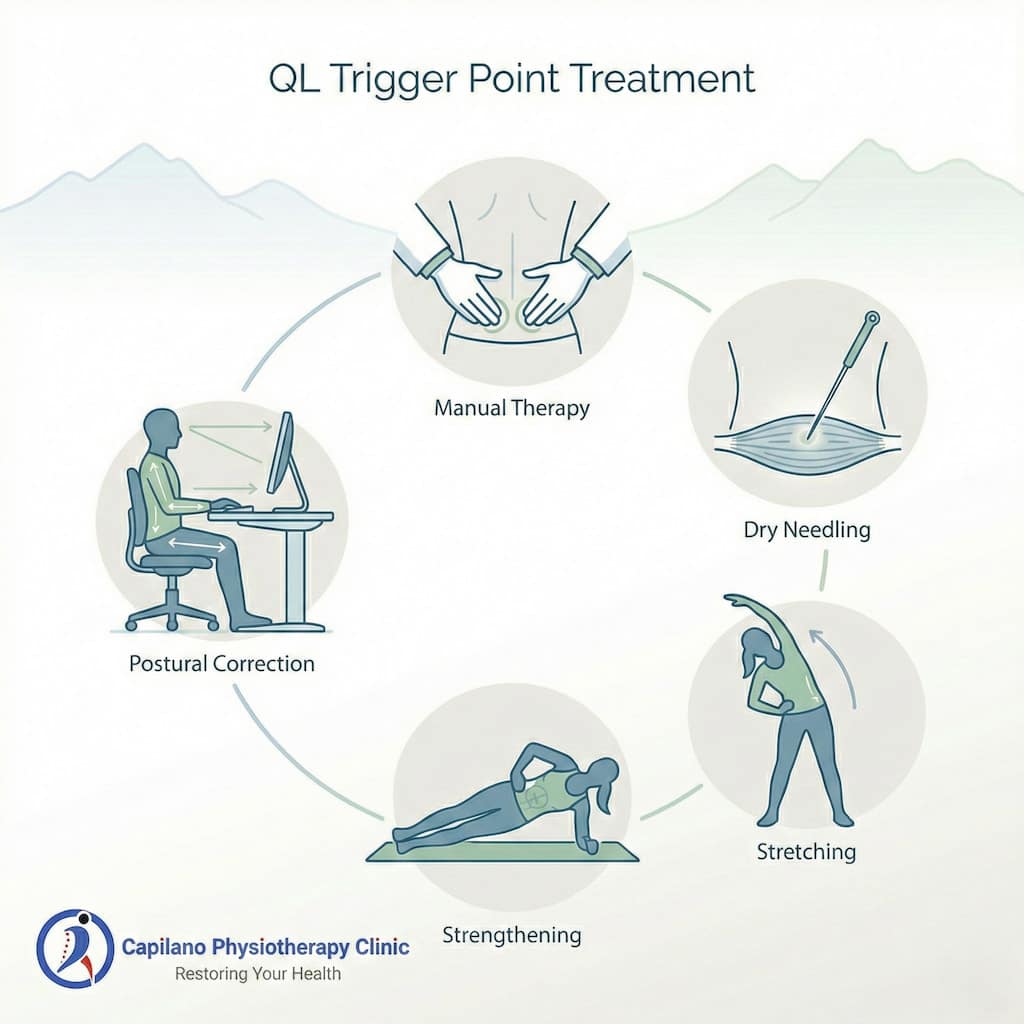
Treatment Options for Quadratus Lumborum Trigger Points
Treatment focuses on reducing muscle tension, restoring mobility, and correcting contributing factors.
Manual Therapy
Hands-on techniques such as soft tissue release and trigger point therapy can help reduce muscle tightness and improve circulation.
Dry Needling
Dry needling targets the trigger point directly using a thin sterile needle. This technique may help reset muscle tone and decrease pain sensitivity. For individuals living on the North Shore, accessing professional dry needling in North Vancouver can be an effective option for managing persistent quadratus lumborum trigger point pain.
Stretching
Gentle side bending stretches and child’s pose variations can lengthen the QL muscle and relieve tension when performed consistently.
Strengthening Exercises
Strengthening the core, gluteal muscles, and lateral hip stabilizers reduces excessive load on the QL. Exercises such as side planks and controlled pelvic stabilization drills are often helpful.
Postural Correction
Improving sitting and standing posture, adjusting workstation setup, and avoiding asymmetrical loading are critical to long-term recovery.
Self-Care Strategies at Home
In addition to professional treatment, individuals can manage symptoms by:
- Using a tennis ball against the wall to apply gentle pressure
- Taking movement breaks every 30 to 60 minutes
- Avoiding prolonged leaning on one side
- Practicing controlled breathing to reduce tension
- Maintaining a balanced strengthening routine
Consistency is more important than intensity when addressing muscle-related pain.
When Should You Seek Professional Help?
You should consider professional assessment if:
- Pain persists for more than two weeks
- Symptoms interfere with daily activities
- Pain radiates below the knee
- There is numbness or weakness in the leg
- Home care strategies are not improving symptoms
Early intervention can prevent chronic patterns from developing.
Preventing Recurrence
Long-term prevention focuses on muscle balance and movement awareness. Maintaining strong gluteal muscles, a stable core, and proper lifting mechanics significantly reduces strain on the quadratus lumborum.
Small daily habits such as alternating sides when carrying objects and adjusting sitting posture can make a meaningful difference.
Conclusion
Quadratus lumborum trigger points are a common but often overlooked cause of persistent low back pain. Because the QL plays a major role in spinal stability, even minor dysfunction can create significant discomfort.
With proper assessment, targeted treatment, and consistent self-care, most individuals can experience lasting relief and return to comfortable movement. If you are living on the North Shore and need professional support, Capilano Physiotherapy Clinic in North Vancouver offers comprehensive assessment and treatment for QL trigger points, including dry needling and targeted rehabilitation. You can contact our team at (778) 743-6090 to book an appointment.