
- Location: Inside Capilano Mall, 59 935 Marine Dr Main Floor, North Vancouver, BC V7P 1S3
- Hours: 7 days a week, 9 AM to 7 PM
- Phone: (778) 743-6090
What is Motor Point Acupuncture?
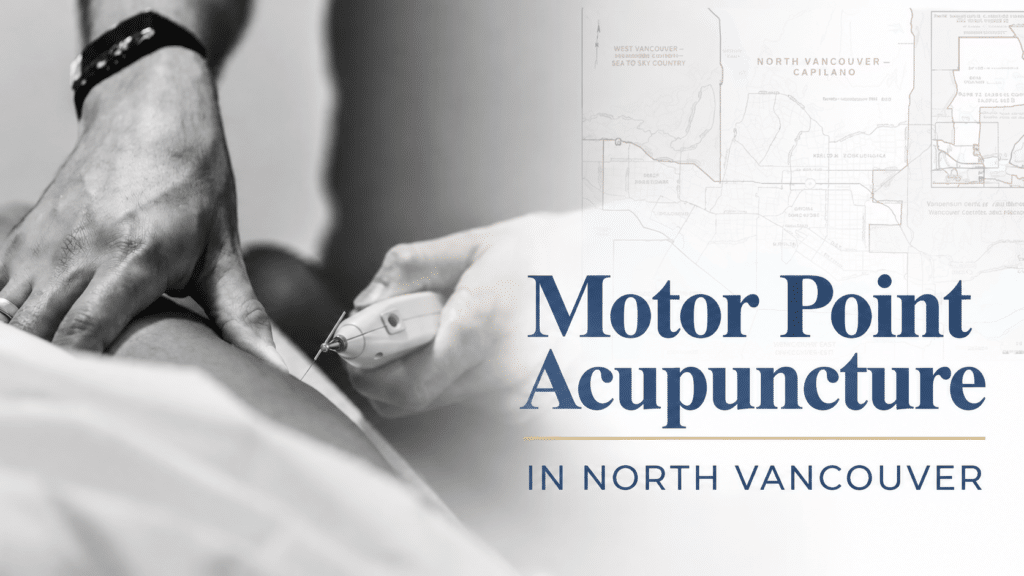
A motor point is the specific site on a muscle where the nerve enters and where electrical stimulation produces the greatest muscle contraction. When a muscle becomes shortened, overloaded, or neurologically inhibited due to injury or chronic pain, its motor point becomes hypersensitive and dysfunctional.
Motor Point Acupuncture is a precise, evidence-informed technique that inserts a fine acupuncture needle directly into these motor points to:
- Reset the neuromuscular connection between the nervous system and the muscle
- Release chronic muscular shortening and trigger point activity
- Restore normal muscle length and contractile function
- Reduce pain by normalizing the neural input to the affected tissue
This approach bridges traditional acupuncture principles with modern neuroanatomy and musculoskeletal science, making it particularly effective for conditions that have not responded to conventional treatment.
How is Motor Point Acupuncture Different from Other Needling Techniques?
Understanding where Motor Point Acupuncture fits within our acupuncture services helps clarify when it is the right choice for you.
Motor Point Acupuncture vs. Traditional Acupuncture
Traditional acupuncture follows classical meridian theory and targets energy pathways (Qi). Motor Point Acupuncture is based on Western neuroanatomy and targets specific neuromuscular junctions. Both use fine needles, but the clinical framework, assessment, and target sites are different.
Motor Point Acupuncture vs. IMS Dry Needling
IMS (Intramuscular Stimulation) targets myofascial trigger points within the muscle belly. Motor Point Acupuncture targets the motor point specifically, the precise site where the nerve meets the muscle, to produce a neuromuscular reset. The two techniques are complementary and may be used together within the same treatment plan.
Conditions Treated with Motor Point Acupuncture
Motor Point Acupuncture is most effective for conditions involving neuromuscular dysfunction, chronic muscle tension, and movement impairment:
Musculoskeletal and Pain Conditions
- Chronic neck pain and cervicogenic headaches
- Low back pain and lumbar muscle dysfunction
- Shoulder pain, rotator cuff dysfunction, and impingement
- Frozen shoulder (adhesive capsulitis)
- Hip and gluteal muscle dysfunction
- Knee pain and patellofemoral syndrome
- Plantar fasciitis and foot muscle dysfunction
Neurological and Functional Conditions
- Neurological conditions affecting motor control and muscle tone
- Post-stroke muscle spasticity and movement rehabilitation
- Nerve compression syndromes where muscle inhibition is present
- Sports performance issues related to neuromuscular inhibition
Injury Recovery
- Post-surgical rehabilitation where muscle activation is impaired
- Work and motor vehicle injury (ICBC, WCB) recovery involving muscular dysfunction
- Chronic pain conditions where standard physiotherapy has plateaued
What to Expect During Treatment
Assessment
Your practitioner begins with a thorough neuromuscular assessment to identify which motor points are dysfunctional. This involves manual muscle testing, movement screening, and palpation of key motor point sites.
Needling
A fine sterile acupuncture needle is inserted precisely into the identified motor point. You may feel a muscle twitch response, which is a normal and often therapeutic sign that the neuromuscular reset has been initiated. The sensation is brief.
Post-Treatment Response
Some patients experience mild muscle soreness for 24 to 48 hours following treatment, similar to the feeling after an effective workout. Improvement in muscle function and pain reduction is often noticeable within one to three sessions.
Treatment Frequency
Most patients benefit from a series of 4 to 8 sessions, depending on the chronicity and complexity of the condition. Your practitioner will provide a realistic estimate at your initial assessment.
Motor Point Acupuncture as Part of Your Complete Treatment Plan
At Capilano Physiotherapy Clinic, Motor Point Acupuncture is rarely used in isolation. It is most effective when integrated into a broader treatment plan that may include:
- Acupuncture for systemic pain modulation and nervous system regulation
- Musculoskeletal Physiotherapy for manual therapy and progressive exercise rehabilitation
- IMS Dry Needling for deep trigger point release alongside motor point work
- Kinesiologist for active rehabilitation and functional movement retraining once neuromuscular function is restored
- RMT (Registered Massage Therapy) for soft tissue preparation and recovery support
- Reducing pain sensitivity by calming the nervous system
- Improving local circulation to irritated or tight tissues
- Decreasing muscle tension and protective guarding
- Supporting recovery by improving how your body regulates stress
You do not have to “believe in it” for it to be useful. Many clients come in skeptical and leave saying the same thing: “I just feel looser and calmer.”
Acupuncture at Capilano Physiotherapy Clinic
Acupuncture should not feel like a mystery session where you hope something happens. We treat it like a clinical tool that fits into your overall plan.
During your visit, we may combine acupuncture with other therapy approaches when appropriate, such as physiotherapy, active rehabilitation exercises, massage therapy, kinesiology, or osteopathy.
Our focus
We focus on the outcomes that matter in real life:
Less pain when you sit, stand, bend, or walk
More range of motion in the neck, back, shoulders, hips, or jaw
Better sleep and less stress related tension
Faster recovery after a sports injury or flare up
A body that feels steady instead of constantly on edge
Conditions We Commonly Treat With Acupuncture
People book acupuncture for a wide mix of reasons, but the patterns are familiar.
Pain and injuries
Back pain, including low back pain and mid back tension
Neck pain and stiffness
Shoulder pain, rotator cuff irritation, and frozen shoulder symptoms
Hip pain, glute tightness, and IT band irritation
Knee pain and overuse injuries
Sports injuries and post training soreness
Work related strain and repetitive stress injuries
Headaches and jaw tension
Tension headaches
Migraines as supportive care
Jaw pain, clenching, and TMJ related tension
Stress, sleep, and nervous system overload
Stress related muscle tightness
Trouble falling asleep or staying asleep
That wired but tired feeling
Digestion symptoms that worsen with stress, like bloating or irregularity
Chronic pain support
If pain has been around for months, it can become a nervous system pattern, not just a tissue problem. Acupuncture may help reduce the overall alarm level, which often makes movement, rehab exercises, and day to day life more manageable.
Note: Acupuncture is supportive care and not a replacement for medical diagnosis. If you have worsening symptoms, new numbness, weakness, fever, unexplained weight loss, or severe pain that is not settling, we recommend medical assessment.
How Acupuncture Works
Research uses different language depending on the area of study, but the practical effects are easier to understand.
Acupuncture can influence:
Nervous system regulation: helping the body shift toward a calmer, less reactive state
Pain modulation: affecting how the brain and spinal cord process pain signals
Local tissue response: improving blood flow and reducing muscle guarding in tight areas
Stress response: supporting relaxation and recovery, especially when stress is amplifying symptoms
For some clients the most noticeable effect is physical. For others it is the combination: less pain and a quieter nervous system.
What to Expect in Your Acupuncture Appointment
A good acupuncture session should feel professional, clear, and tailored to you.
Assessment and planning
We start with a short assessment and questions such as:
What are your main symptoms and what triggers them?
How long has this been going on?
What does movement look like today?
What has helped, what has not?
Then we explain the plan for the session, including where needles will be placed and what sensations you might feel.
The treatment
You will get comfortable on the treatment table.
Needles are placed in selected points, often near the problem area and sometimes in related areas.
Most people feel a gentle heaviness, warmth, tingling, or a dull ache.
You relax for a short period while the needles do their work.
After the session
It is normal to feel:
Relaxed or a little sleepy
Lighter in the area that felt tight
Mild tenderness or small bruising in rare cases
We will also give simple guidance on what to do next, such as hydration, light movement, or a few mobility drills.
How Many Sessions Will I Need?
There is no magic number, but there is a practical way to plan.
Recent issues: some people notice improvement within 1 to 3 sessions
Persistent or recurring issues: often respond best to a short block of care, such as weekly sessions for a few weeks
Maintenance care: some clients book every few weeks to stay ahead of flare ups, training load, or stress related tension
We will recommend a plan based on your symptoms and goals, then adjust based on how your body responds.
Acupuncture vs Dry Needling and IMS
These terms get mixed up online, so here is the simple breakdown.
Acupuncture is a broader system that uses points across the body to influence pain, function, and nervous system regulation.
Dry needling is a technique often used to target tight muscle bands, commonly called trigger points.
IMS (Intramuscular Stimulation) is a specific style of dry needling used to release shortened muscles and improve movement.
All use similar needles. The difference is the clinical reasoning and how the points are chosen. If you are not sure what fits your case, we will guide you.
Is Acupuncture Safe?
Yes, when provided by trained professionals using sterile, single use needles.
Acupuncture is generally well tolerated. The most common side effects are mild and temporary, such as slight bruising, tenderness, or temporary fatigue.
Tell us if you:
Are pregnant or trying to conceive
Have a bleeding disorder or take blood thinners
Have a pacemaker or implanted electrical device
Have a history of fainting with needles
We will adapt the treatment plan accordingly.
Who Is a Good Candidate for Acupuncture?
Acupuncture may be a good fit if:
Your pain feels stubborn even after rest
Stress is clearly amplifying your symptoms
You have tight muscles that keep returning
You want support while doing physiotherapy or rehabilitation
You prefer a treatment that feels calming and recovery focused
If you are unsure, we can recommend the right starting point based on your goals.
Our Services
Book Now
Contact us today to schedule your appointment. We’re here to help!
Why Choose Capilano Physiotherapy Clinic for Motor Point Acupuncture?
Specialized Training
Our practitioners are trained in both traditional acupuncture and Western neuromuscular assessment, giving them the clinical foundation to apply Motor Point Acupuncture accurately
Integrated Approach
Motor Point Acupuncture is combined with physiotherapy, exercise, and education for lasting results, not just temporary relief
One-on-One Sessions
Every treatment is private and built around your specific assessment findings
ICBC and WCB Accepted
Experienced in treating patients under motor vehicle accident and workplace injury claims
Our Acupuncture Specialists
Meet the experts behind your acupuncture care.

Kambiz Navirian
Acupuncturist

Maryam Elmi
Acupuncturist

Fatemeh Ahmadvand
Acupuncturist
Make an Appointment
Take the first step toward recovery. Schedule your personalized session with our expert team and start feeling better, faster.
Frequently Asked Questions
Is Motor Point Acupuncture painful?
The needle insertion itself is generally well tolerated. When the motor point is reached, you may feel a brief muscle twitch or a deep aching sensation. This is normal and typically resolves within seconds. Most patients find the procedure manageable and are comfortable returning for follow-up sessions.
How is Motor Point Acupuncture different from IMS dry needling?
Both techniques use fine needles to treat musculoskeletal pain, but they target different structures. IMS targets trigger points within the muscle belly. Motor Point Acupuncture targets the motor point, the precise site where the nerve enters the muscle, to produce a neuromuscular reset. The two are complementary and can be used together.
How many sessions will I need?
This depends on how long the condition has been present and its complexity. Many patients notice improvement within 1 to 3 sessions. A typical treatment course is 4 to 8 sessions. Your practitioner will give you a realistic estimate after your initial assessment.
Can Motor Point Acupuncture help with neurological conditions?
Yes. Motor Point Acupuncture has clinical applications in neurological rehabilitation, including post-stroke muscle spasticity and conditions involving impaired motor control. Your practitioner will assess whether your specific neurological presentation is appropriate for this approach.
Is Motor Point Acupuncture covered by insurance?
Coverage depends on your extended health plan. Many plans that cover acupuncture or physiotherapy include Motor Point Acupuncture when performed by a registered practitioner. We recommend checking with your provider. We also accept ICBC and WorkSafeBC claims.
What is the difference between Motor Point Acupuncture and traditional acupuncture?
Traditional acupuncture is based on classical meridian theory and targets energy pathways. Motor Point Acupuncture is grounded in Western neuroanatomy and targets specific neuromuscular junctions to restore muscle function. Both use acupuncture needles, but the clinical assessment, target points, and therapeutic goals are different.
Need Help?
If you have any questions or need assistance, don’t hesitate to reach out.
Call us or book your appointment today!
Our Services